Thursday, July 28, 2011

Family Eats--Encouraging Healthy Family Eating Habits


Credit: AP/Meredith Corp.
This past week I have noticed many articles about eating healthy.  This past Sunday, the New York Times had an article in their Sunday Review about what it will take to get America to eat healthier.  This month’s Better Homes & Gardens featured First Lady Michelle Obama with ideas on helping children eat healthy.  This seems to be a growing trend, and over the last few months I have connected with a few organizations that I believe echo the same philosophy that I spoke of in Coming Home: A Seasonal Guide To Creating Family Traditions; those of sitting down together as a family for dinner, living mindfully, eating locally produced seasonal foods, and truly connecting one with another. 

Family Eats & I connected to share ideas recently, and I’m proud to introduce them to our readers.

Rosanna:  Much of the Family Eats mission is to help others learn about the importance of sitting around the table as a family during mealtime.  What advice do you have for people trying to start this daily ritual?

Family Eats:  Numerous studies have confirmed that families who eat together at least once a week are healthier – both physically and emotionally. But despite this, many families continue to be caught in an endless cycle of running, running, running. Running to work. Running to a soccer game. Running to everything except dinner with the family.

Our goal at Family Eats is to help readers reconnect with the food we eat and the families we love. But it takes a commitment to do so. It takes a commitment to slow down and make the effort to gather around the table, whether it is for dinner, breakfast or lunch.  

Photos Courtesy of
John Granen Photography
Because the transition from eating on the run to eating around the table may seem daunting, Family Eats suggests taking ‘baby steps.’ Choose one day a week to sit down at the table for dinner, and keep that ‘date’ for several weeks running. Be it Sunday dinner or Friday night (homemade) pizza and a movie, after a few weeks, it will become a habit. Then you’ll be more likely to take another small step to gather for another meal together. Eventually, gathering around the table will turn into a great family tradition.

And, if dinnertime is too much of a commitment, then try something else – breakfast on Saturday morning, teatime on the weekends, or a packed lunch enjoyed in the park mid week.

Yes, memories can be made on the soccer field, but true connections are made at the table. Start the tradition today!


Rosanna: In the olden days neighbors used to stop by for a cup of coffee and for a visit.  Our lives seem so fast-paced that this practice has nearly disappeared.  What recommendations do you have for “spontaneous entertaining”?

Family Eats:  Just the other day while Greg was out front watering the garden, he ran into some friends returning from the library and invited them to come on in. When I offered them something to drink and eat, they refused, saying that they didn’t want to intrude.

The ritual of dropping by – or spontaneous entertaining – shouldn’t be an intrusion, rather it should be treated as a celebration, a time to connect with friends and neighbors. Unfortunately, I think the joy of spontaneous entertaining is something our society has lost.

Gathering with friends and family on a moment’s notice is about building community, building relationships and building memories. When it comes to offering food for guests, it doesn’t have to be anything complicated requiring much preparation, just something simple such as crackers and cheese, premade pastries or cookies that are stored in the freezer, or chopped fruit and nuts. My mother always has some sort of baked goods in the freezer ready for whomever it is that stops by, even it is me.

Welcoming guests into your homes for a bit of spontaneous entertaining doesn’t require too much effort – just a bit of planning. If you routinely keep your home stocked with healthy foods for yourself and your family, then you’re all stocked and ready to welcome whoever may stop by.


Rosanna:  Please share some practical tips on how to integrate healthy eating into our children’s everyday menu?

Family Eats:  It is very hard for parents to fight the ‘healthy eating versus junk food’ battle with their children. But a lifetime of healthy eating habits starts at home, which is why a discussion about food needs to be a continual discussion you have with your children.

We don’t lecture our kids about food, demonizing snacks and candy, but rather make them aware of the goodness that can be found in certain foods, and how they can help the body grow. (You know, the old ‘carrots are good for your eyesight,’ type of discussion.)

It is also important to surround your children with good food choices. Having a kitchen stocked with healthy choices, and making meals at home is a great way to involve the children in the discussion about foods. Because children learn from all their parents do, it is important to make healthy choices yourself, so that you send a message to them that food is important.

And, when it comes to snacking, we don’t keep cupboards stocked with an endless supply of boxed cookies, crackers, chips and other convenience foods, allowing them to grab a handful whenever they want. Instead, we have set specific times for meals and snacks. I plan what and when snack time will be, then give them a specific portion of snack.

Because my children are young, I feel it is essential that I make the choices for them, guiding them to make better decisions. And, yes, I do allow them to enjoy ‘unhealthy’ snacks from time to time. It just isn’t an option on a daily basis.

We always have fresh fruit available, and prepare cut vegetables such as carrots, celery, cucumbers or red peppers ahead of time, and place them on a plate with a dipping sauce or hummus and crackers during late afternoon snack. On occasion, I make muffins or scones in the morning to serve for both breakfast and as an afternoon snack.

We talk about choices, we offer variety, and make healthy food choices a part of our every day lives. Now I find the kids starting food conversations among themselves at the dinner table. They ask for olive oil to dip their bread into instead of butter. They participate in a “Who can make the largest crunch with their carrot” competitions, ask for juicy apples in the afternoon, and tell me that they’d like my homemade granola bars in their school lunch the next day.

I feel that this is because we have had discussions about food on a continual basis. And by making the connection with food a positive experience, I feel confident that they will be equipped to make better decisions when they are away from home.


Rosanna:  How often do you serve your family vegetarian meals?  Do you have a favorite recipe to share?

Family Eats:  We try to incorporate vegetarian meals at least once a week into our menu. However, it doesn’t always turn out that way, partly because I don’t always have it in me to fight the vegetable fight with the kids.

With that said, we have made an effort to cut back on our consumption of meat, trying new recipes with the goal to incorporate more meat-free meals each week. In the process, the family has enjoyed more grains, beans, and vegetables. And, I haven’t heard them comment, “Is this all we’re having?”

It was hard to do at first, but once we made the decision to do so and followed through with it for a few weeks, it became habit. It is still a challenge from time to time, but it is a challenge that I think is well worth it.
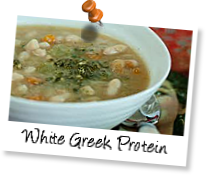
Family Eats' delicious Greek white
bean soup.  Click photo for
recipe.

Some of our favorites are quick, easy and familiar meals such as a vegetable stir fry, a Greek white bean soup, and Grilled Cheese with Smoked Mozzarella and Basil.

Another one of our favorite recipes is for Spicy Peanut Sesame Noodles, and one I have enjoyed ever since I interviewed Helen Chen for Family Eats. It appears in her book Easy Asian Noodles (John Wiley & Sons, Inc. 2010). It is a quick and easy recipe to prepare, and one that is a hit with my peanut-butter loving kids.

1 lb. Chinese wheat or egg noodles, or thin spaghetti
3 tbsp sesame oil
3 tbsp raw sesame seeds
½ cup creamy peanut butter
1/3 cup canned chicken broth, warmed
3 tbsp light soy sauce
2 tbsp Chinkiang or balsamic vinegar
1 tbsp chili-garlic sauce, or to taste
1 tsp sugar
3 tbsp thinly sliced scallions
1 tsp peeled and grated fresh ginger
½ seedless cucumber, shredded
¼ lb snow pees, ends snapped off, strings removed, parboiled 15
seconds, drained, rinse in cold water and shredded
1 medium carrot, shredded
¼ cup chopped cilantro (optional)

Bring 5 quarts of water to a boil and stir in the noodles. Cook until a little more tender than al dente. Drain and rinse noodles under cool water. Drain again and toss with 1 tbsp sesame oil, place in large bowl, and set aside.

Toast sesame seeds in ungreased pan. Transfer all but 1 tbsp of seeds to a mortar and pestle and crush until most of seeds are broken.

In a small bowl, blend the peanut butter with the broth, soy sauce, vinegar, chili-garlic sauce, and sugar into a smooth paste. Stir in 1 tbsp of the scallions, the ginger and crushed sesame seeds. Cover until ready to use.

When ready to serve, gently toss the noodles with the cucumber, snow peas, carrot, peanut sauce and cilantro, if using, and the remaining 2 tbsp scallions. Transfer to a serving platter and sprinkle with reserved sesame seeds.

Note: I leave out the chili garlic sauce and allow anyone who wants, to add to bowls individually.


Rosanna:  Your recent blog post is titled, “Gathering Around The Table in Style:  The Table and its Cloth”.  Share with our readers how your use of table setting has encouraged family traditions.

Family Eats:  The ritual of setting the table – with dinnerware and not to-go containers – is an essential part of creating a family tradition. Even if you bring a take-out dinner home, transfer the meal to serving dishes and set the table.
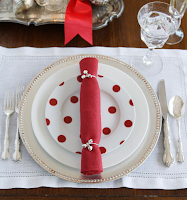

Simple table decorations set the stage for a pleasant dinnertime experience. Whether it is the everyday placemat with the day-to-day dishes, a holiday table decorated with Grandma’s tablecloth and set with themed dinnerware, or a small vase filled with flowers, creating an enjoyable atmosphere in which to eat is important.


I love my collection of tablecloths, but we don’t always use them (I’d be washing it every night!). When not covered with a cloth, I try to have something on the table that has a story to it. Sometimes it is a vase filled with flowers cut from the garden. Other times it is a casserole served in the cazuela I bought while in Portugal years ago, my grandmother’s covered glass bowl in the shape of a chicken, or olive oil and vinegar cruets from Italy. These little appointments make the table feel like home – and that is a wonderful tradition to have.


Rosanna:  What are your must-haves in the house for healthy eating?

Family Eats:  A well-stocked pantry is essential for healthy eating. If you’ve nothing in the cupboards, then you’ll tend to grab whatever you can find to munch on – and most likely it will not be a healthy choice.

I am a perimeter shopper, buying a lot of bulk foods – from rice to beans and grains. They are a versatile way to mix things up for dinner – and, when you have these items on hand, you’ll be ready to create a wide variety of healthy mealtime options from bean soup to barley salad or quinoa cakes. Other essentials for the kitchen include a healthy dose of olive oil, garlic, and spices, which can also help transform the mundane dinner into something different. As well, I keep a couple of cans of San Marzano tomatoes on hand. They are great for making a quick salsa when you don’t have fresh tomatoes on hand, are the perfect addition to a slow cooked pot roast tacos, as well as the go-to choice for creating great sauces, including my new favorite, Rosanna’s Tomato Vodka sauce.

Don’t forget the produce aisle. Although perishable, it is essential to have a healthy dose of fruits and veggies on hand, especially when they are prepared and ready to eat. If you shop on Saturday, make Sunday the day you wash up the veggies and chop them for the new few days. When they’re prepared and ready to eat, you’ll be more likely to grab them for a snack or a meal.

Finally, and perhaps the most important ingredient to have on hand to ensure calm nerves in the kitchen, is some chocolate. I enjoy breaking off chunks from a bar of bittersweet chocolate, or, when I find some time alone, I indulge in one (or two) of Fran’s Chocolates Smoked Salt Caramels.


While we were talking, Family Eats also asked me a few questions. To read their interview of me, and find my delicious and healthy vodka sauce recipe, visit the Family Eats blog.  For more information about Family Eats, visit their website at http://www.familyeats.net/.  They also have a Facebook page and a Twitter page.


www.rosannainc.com

Thursday, July 7, 2011

A New Discovery of Oldways


If I’ve said it once, I’ve said it a thousand times: what we eat, how we eat it, and with whom we eat have a significant impact on our health, well being, and sense of community. These notions have provided the foundation for our design philosophy at Rosanna from the start. They are also the heart and soul of my book, Coming Home: A Seasonal Guide to Creating Family Traditions So imagine my surprise when I discovered the same core values in another book, The Oldways Table: Essays and Recipes from the Culinary Think Tank by K. Dun Gifford and Sara Baer-Sinnott. These two founded and run Oldways, the self-described “food think tank.” I was intrigued by their work, especially as it applies to the Mediterranean Food Pyramid. The book was so compelling that I contacted Oldways to find out more.  Dun passed away last year, but Sara continues with Oldways and was gracious enough to grant me an interview to explore their approach to eating well.  I hope you find these answers as educational and inspiring as I did.
Rosanna:  What is the bio mission of Oldways?  What is its purpose?
Sara Baer-Sinnott:  Oldways was founded by K. Dun Gifford, a food enthusiast and advocate in 1990.  Dun began Oldways as an educational organization to combat the rising prevalence of “pseudo foods” that were taking over the marketplace.  He saw that poor eating habits and chronic disease were spreading he wanted to change the way people ate—the base of our mission still today.  He began with the idea that if he could bring people back to the table, reintroduce them to the ‘old ways’ and revive the healthful pleasures of real food he could make a difference and collectively we could change the way people eat.
Although Dun passed away a year ago and many things have changed since 1990, our work continues and his mission lives on through our educational programs including the Whole Grains Council and Mediterranean Foods Alliance.
Rosanna:  What is the Mediterranean diet?  Why is it beneficial to one's health?
© 2009 Oldways Preservation & Exchange Trust
Sara: The Mediterranean Diet is a way of eating based on the traditional foods (and drinks) of the countries surrounding the Mediterranean Sea.   The Mediterranean Diet is not a diet, as in “go on a diet,” even though it is a great way to lose weight or improve your health. Rather, it is a lifestyle – including foods, activities, meals with friends and family, and wine in moderation with meals. It has been consistently reported to promote good health. The health benefits are endless, from cardiac to brain function, this tried and true way of life looks at total health and well-being.  U.S. News & World Report recently announced their ranking of top diets and named the Med diet as one of the best overall diets. The Traditional Mediterranean Diet, has at its core vegetables, fruits, whole grains, beans, nuts, peanuts, herbs, spices, and healthy fats such as those found in olive oil; fish, poultry and lean red meat; cheese and yogurt; and moderate amounts of wine. Other vital elements of the Mediterranean Diet are daily exercise, sharing meals with others, and fostering a deep appreciation for the pleasures of eating healthy and delicious foods.

In 1993, as a way to help people bring this diet to life, we developed the Mediterranean Diet Pyramid.  Throughout the years we have introduced modified versions of this pyramid.  And have developed alternative traditional diet pyramids for other cultures including an Asian Diet Pyramid, Latin American Diet Pyramid, a Vegetarian Diet Pyramid and we will actually be introducing an African Heritage Pyramid this November, which is very exciting for us!
Rosanna:  What are the most important steps to take to begin eating more healthy?  Is there a step by step plan?  Are there specifics--i.e. what does one need in their refrigerator and pantry to start this process?
Sara:  Taking small steps can be the best way to make positive, healthy changes.  We are all creatures of habit so it is important to not let yourself feel overwhelmed by an instant overhaul, you should nurture yourself and enjoy the process.  At Oldways we offer simple steps to help with better health.  It's important to keep meals simple and easy, aim for making every meal taste great, and to eat nourishing foods that promote satiety.  We outline these 8 simple steps to help people learn how to adopt the Mediterranean eating pattern: Eat lots of vegetables; Change the way you think about meat and if you eat it, add small amounts to vegetable sautés or use as a garnish for a dish a pasta; always eat breakfast; eat seafood twice a week; cook a vegetarian meal one night a week, and then aim for two nights a week; use healthy fats in daily meals, especially extra-virgin olive oil, nuts, peanuts, seeds, olives, and avocados. In addition, we encourage consumers to discover the wide variety of delicious Mediterranean foods at the supermarket and learn how to routinely break old habits and make healthy substitutions. For example, buy Greek yogurt and use that instead of sour cream; sample different varieties of hummus, find your favorites, and use that in place of mayonnaise.
Rosanna:  I’m very intrigued by the section on moderate alcohol intake, especially since many in America are over-drinkers.  Explain the health benefits of alcohol intake.  Define "moderate."
Sara:  The definition of moderate in the Mediterranean diet is they idea of enjoying a glass of wine with dinner.  Studies show that this type of moderate alcohol consumption with meals – one glass for women and two for men – has cardiovascular benefits.
Rosanna:  Because we design dinnerware with the explicit purpose of bringing people together, this last question is one I attempt to answer every day: How does eating well build a sense of community and bring people together?  
Sara:  When I learned about you and your work, I was so excited to hear that you’re is so committed to bringing people together to enjoy food.  If you're enjoying meals with others, you aren't inhaling a quick meal.   And if you eat in the presence of conversation, you're not mindlessly eating in front of the TV. The Mediterranean Diet is grounded on the principles of enjoyment and pleasure. Foods, drinks and meals are especially enjoyable if eaten with others, when possible, and savored.  Research is even pointing to more health benefits gained when meals are enjoyed together. From the food to the ambiance to savoring the taste of food and wine to the company we keep while eating—this is all part of the total experience.
What the world needs now, more than ever, is to think like Oldways. We need to come together, eat together, and turn our attention towards the total experience of breaking bread as a community. I second Oldways' ideals, and truly believe this is one of the most important ways to live well.
While we were talking, Oldways also asked me a few questions. To read their interview of me, and find a delicious healthy pasta recipe, visit the Oldways blog. For more information about Oldways, visit their website at www.oldwayspt.org.  They also have a Blog, Facebook, and Twitter.


www.rosannainc.com

Tuesday, June 28, 2011

Preparing An Independence Day To Remember

The USA has a birthday that’s just around the corner, and it’s time to think about how we’re going to celebrate.
Here are some tips to help create a delightful and delicious 4th of July gathering.

Decorate with Vintage Americana
I like my 4th of July decorations to make a statement. Over the years, I’ve acquired a collection of vintage flags and Americana, which I mix and match with newer decorations and dinnerware. I find that incorporating vintage and antique decorations into the mix adds some soul to the aesthetic of the event.

There are numerous inventive ways you can decorate with your flags—place smaller flags in a vase as a centerpiece on your table, or use an extra large flag as a tablecloth.

You can collect vintage flags and decorations at flea markets or your local vintage store. You can also find some gems online at sites like Etsy and even eBay.

Tablesetting
Always have a set of 12 white dinner plates and 12 white napkins.  This is one of my little secrets.   Doing this allows you to mix and match salad plates to create hundreds of possible tablescapes, depending on the occasion.  For Independence Day, choose a patriotic-looking or an Americana salad plate.  If you don’t have one, find red or blue---after all, you’ve already got the white in your dinner plates!

Coordinate Your Costumes
To create a more festive feel for the event, encourage your guests to wear red white and blue clothing. The sillier, more flamboyant, and outrageous the clothing, the better.

Make One Special Drink
Make sure to have all the usuals—juice, beer, wine, water, and soda—on hand. In addition, make one special, summer-themed punch. This one drink can bring a surprising amount of cohesion to your meal and the event as a whole. Drinks that feature a refreshing summer fruit like peach, watermelon, or strawberry are always well received on hot days.

American Food with a Twist
Because the 4th of July is all about celebrating America, and America is famous for its cultural and ethnic diversity, take a truly American approach to the holiday by incorporating your family’s food heritage into traditional American dishes. Make hamburgers with the spices traditionally used in your ethnic background. The same thing goes for pies, ice cream toppings, and fruit salads. Prepare a traditional side dish unique to your family’s heritage.   Better yet, ask your guests to showcase their heritage through a side dish they prepare.

Honor US History
When my children were little, one of the things they loved most about the 4th of July was putting on an annual play. In the play, we reenacted important moments in US history. We performed Paul Revere’s famous ride, a scene in which George Washington asks Betsy Ross to sew the American flag, and the Martin Luther King Jr I Have A Dream Speech. We interwove these important events with the story of our own family in America, starting with our ancestors’ arrival to Ellis Island. We always ended the show with a rousing rendition of “Yankee Doodle Dandy.” Putting on a play can start with a fun brainstorming activity in which you ask children to think of important events in America. Later you can turn these into the plot for the play. Pick up a few white wigs and tricorn hats at your local costume store to add to what you have at home, and costumes won’t be too hard to devise.

Good, Old-Fashioned Games
Organizing a few games throughout the day, like croquet, bocce ball, Frisbee, softball, or charades, brings guests together and creates a spirit of conviviality.  On those sweltering Independence Days, have a water balloon toss with the kids.
           
Fireworks
Every state has different laws when it comes to setting off fireworks, but no 4th of July celebration is complete without a few flashes in the night. At the very least, make sure to have some sparklers.

Family Tradition
Whatever you decide to do, make sure to create family tradition.  Teach your children about their own heritage and how it plays a part of the American Dream.  As I mention in my book, Coming Home: A Seasonal Guide to Creating Family Traditions, celebrating any festive occasion is always richer when personal meaning is attached.

Note:  Photos by John Granen, for “Coming Home,” published by Stewart, Tabori & Chang


www.rosannainc.com

Monday, June 20, 2011

Fifth Annual Tablescape Contest

Years ago, people would invite a neighbor or friend over on the spur of the moment for a cup of coffee, dessert, or for a weekend grill. Our day-to-day lives have become so busy in recent years that dinner parties are planned 3 months out.
Part of my belief in creating traditions is to foster relationships and connections through daily rituals and traditions. Much of the joy in my life has come from informal get-togethers.

This year’s Tablescape Contest Theme is “The Spontaneous Gathering.” It’s time for you to set your table for the spur of the moment get-together. Use your creativity, mixed with Rosanna collections, and remember spontaneous gatherings don’t necessarily take place at the dining room table. Share with us the story behind your tablescape design. Winners will be chosen by Rosanna herself. So join in for your chance to win a $500 Rosanna gift certificate, and be featured on Rosanna’s Table Talk blog.

New This Year
Starting on July 11th, we will choose a Table Of The Week to showcase on our Facebook, Twitter, and social media sites. At the end of the contest, all the Tables Of The Week will be entered into a drawing to win an additional prize.
  

Get Setting Now
Our Fifth Annual Table Setting contest will start on July 1, 2011 and end on August 31, 2011. Winners will be announced shortly after.
For a little inspiration, take a look at the photographs from our last few contests:
OFFICIAL RULES
1. Anyone with a passion for Rosanna-ware and tablescape design is welcome to compete, regardless of age. 

2. Set the table for at least two. No actual food or Rosanna products is required.

3. Contest begins on July 1st, 2011 and ends August 31st, 2011 at 11:59pm PST.

4. Submit up to 2 photos of your tablescape and the story behind the design. Digital submissions must come as jpegs, around 4x5 inches, no less than 72 dpi and no more than 180 dpi.

5. When entering, make sure to include your name, your city, and an email or phone number where we can reach you. We respect your privacy and will not give out any of your information.

6. Photos in hard copy will not be returned.

7. Rosanna Imports, Inc. reserves the right to use and/or publish photos of your table setting submission however we see fit. Photos may be published on social media sites. Publishing does not necessarily constitute a winning entry. By submitting your photo, you agree to these terms.

8. Please email all enteries to info@rosannainc.com.
Mailed entries should be sent to:
Rosanna Inc
Attn: Tablescape Contest
6755 East Marginal Way S.
Seattle, WA 98108


www.rosannainc.com

Tuesday, June 14, 2011

Connections & Traditions In Every Dish

The message behind every Rosanna dish is the same: slow down, appreciate one another, connect.

Photos courtesy of John Granen Photography;
from Rosanna's book, Coming Home
Human beings hunger for connection. That’s why a moment of relation to another is often the most fulfilling moment of a day. Because moments make up our days, days make our years, and years make our lives, continually seeking out new ways to connect with each other is of vital importance to our happiness.

I designed the collections below to help with the creation of daily rituals, which in turn allow people to bring connection into everyday life.

Happy Birthday & Petite Treat Collections
Creating traditions around common celebrations is easy.  Taking the Happy Birthday plates out on each family member’s annual celebration creates a tradition, a memory.  They can provide the vehicle to that special feeling experienced when one knows something exciting is about to happen.  The festive Happy Birthday plates can become family heirlooms and continue the tradition throughout the generations.  Moreover, our individual cupcake pedestals provide a quirky twist to a birthday celebration, making the celebrant feel extraordinarily special.  Or just use them to serve chocolates or cookies---either way the recipients will smile.

But tradition and connection should be regular and frequent.  I created our Gelato ice cream bowls to encourage people to gather together for a special treat—even if for no particular reason or celebration. Because, let’s be honest, who can say no to ice cream? These bowls also encourage us to eat locally or freshly, providing an ideal way to serve pudding or fresh berries.

The amazing and vibrant produce of Pacific Northwest farmers’ markets inspired me to design our Farmer’s Market bowls emblazoned with images of fresh vegetables. Hopefully, the images will inspire you to visit your own local farmer’s market, or at least use some of these delicious ingredients to cook a healthy meal for family or friends.

The claim that we have “no time,” is heard in an almost constant refrain these days. People have to plan dinner parties three months out because we are so overscheduled.  I designed our Primavera tea set to fight back against this predicament. Hopefully, it will encourage people to spontaneously call up a friend and ask them over for a cup of tea and a chat.  Spontaneous gatherings can be so much more fulfilling and less pretentious.


Whether over tea, during dessert, or at the dinner table, these are dishes that encourage connection every day. I myself am a passionate advocate of family dinners, featuring a home cooked meal, nicely set table, candles, and pleasant music. Studies have shown that children who come from families that sit down for a dinner together are better adjusted emotionally and intellectually. So, even if it’s just once a week, set aside a little time to spend with your family. We love connection because it makes us feel so good, but nonetheless it remains elusive. We need to fight to keep it in our lives every day. These dishes are my small contribution to this incredibly important campaign.
Note:  For more information about creating your own traditions, living mindfully,
and many of Rosanna's recipes, check out her book,
"Coming Home: A Seasonal Guide to Creating Family Traditions."


www.rosannainc.com

Tuesday, May 31, 2011

Memorial Day Celebration, Re-envisioned


When I was a little girl, my family celebrated Memorial Day the same way every year: my grandmother would prepare the most delicious fried chicken, coleslaw, and homemade, hand-cranked ice cream. The whole family would assemble at her house for a sunny, afternoon feast. Before eating, we would toast my grandfather, who fought in WWII. Following the meal, we would all make a trip to the cemetery to pay respects to my uncle, who lost his life in the Korean War.

Although the United States continues to send soldiers overseas to fight, no one from the last two generations of my family has served in the Armed Forces. As a result, Memorial Day has faded somewhat from my family’s collective experience. So this year, I decided to revive and renovate my family’s traditional Memorial Day celebration.

Instead of visiting the graves of my grandfather and uncle, our family had a discussion over dinner about the significance of Memorial Day for all Americans, and what Memorial Day means to us, as individuals.

Below, you will also find recipes inspired by grandmother’s delicious creations, updated to address modern tastes and health concerns.

Regardless of our immediate, individual proximities to war, Memorial Day offers us yet another opportunity to spend meaningful time with family or friends, and to honor Americans who have devoted their lives to service for our country.

Memorial Day 2011 Menu
Fried-Baked Crispy Chicken
Red Cabbage Coleslaw
Strawberry Salad with Lime

Fried Chicken

INGREDIENTS
6 drumsticks free-range chicken
4 thighs free-range chicken
1 cup of fresh homemade breadcrumbs (make in the food processor)
1 tsp. ground sea salt
½ tsp. freshly ground pepper
1 cup of fresh milk
½ cup canola oil
¼ cup salted butter

1.  Remove chicken from the package and select a large shallow pan that will accommodate all the chicken pieces.
2.  Pour the milk in the pan.  Place the chicken in the pan and rotate so the milk coats both sides of the chicken.  Place in the refrigerator.
3.  Heat the oven to 325 degrees and toast the day old slices of white crusty bread until golden brown.
4.  Remove the bread from the oven when golden brown and crispy.  Cut the bread into large squares and place in a food processor.  Pulse until all bread has become fine breadcrumbs. 
5.  Remove the crumbs and place in a 10-inch baking dish.  Season with sea salt and ground pepper.
6.  Take a large iron skillet or stainless steel skillet that can hold all the chicken pieces.  Heat to medium high.
7.  Add the canola oil and the butter to the skillet.  Heat on medium high.
8.  Once pan is hot, add the chicken.  Brown, and continue turning chicken until all sides are browned evenly.  Chicken should look golden brown.
9.  Remove chicken from skillet and place in a large baking dish.  Salt generously with freshly ground sea salt.
10.  Place chicken in a pre-heated 350-degree oven for about 40 minutes.  After 40 minutes, make a small cut in the chicken to check for doneness.  Meat should be white and juices should be clean.


Homemade Red Coleslaw

INGREDIENTS
1 head red cabbage
1 bunch small green onions
3 small carrots
½ cup olive oil mayonnaise
1 tsp. red wine vinegar
1 tsp. sugar
½ tsp. freshly ground sea salt
½ tsp. freshly ground pepper

1.  Cut red cabbage into ½ inch slices.  Cut again to make shred of cabbage approximately 4 inches long.
2.  Place in a 12-inch low bowl for dressing and serving.
3.  Cut the white heads of the green onion off the stems, remove the roots.  Chop the small white part finely.  Add to the chopped cabbage.
4.  Cut the carrots into 4-inch pieces, by slicing in half and then cutting into fine julienne strips.  Add to the coleslaw.
5.  In a separate bowl, mix the mayonnaise, red wine vinegar, sugar, salt and pepper vigorously with a fork until smooth. 
6.  Place tablespoons of the dressing scattered across the top of the coleslaw.  Toss with salad tongs until coated.
7.  Add salt or pepper (if necessary) to taste.

Serve healthy portions with Fried Chicken.


Strawberry Salad with Lime
Make this strawberry salad with fresh strawberries from the farmer’s market. You don’t need much else. Strawberries that are truly in season speak for themselves!

INGREDIENTS, serves 3
Fresh strawberries
Juice of 1 lime
Zest of 1 lime
2 tbs brown sugar

1.  Wash, de-stem, and cut strawberries in bite-size pieces.
2.  Zest whole lime. Set zest aside.
3.  Cut lime in half and juice. Set juice aside.
4.  Pour strawberries into a large bowl.
5.  Mix in zest, juice, and brown sugar with a large spoon.
6.  Cover bowl with saran wrap and let rest in the refrigerator for one hour or more. The longer you let the berries sit, the juicier they’ll become!

Serve salad on its own, or topped with a dollop of whipped cream.


www.rosannainc.com